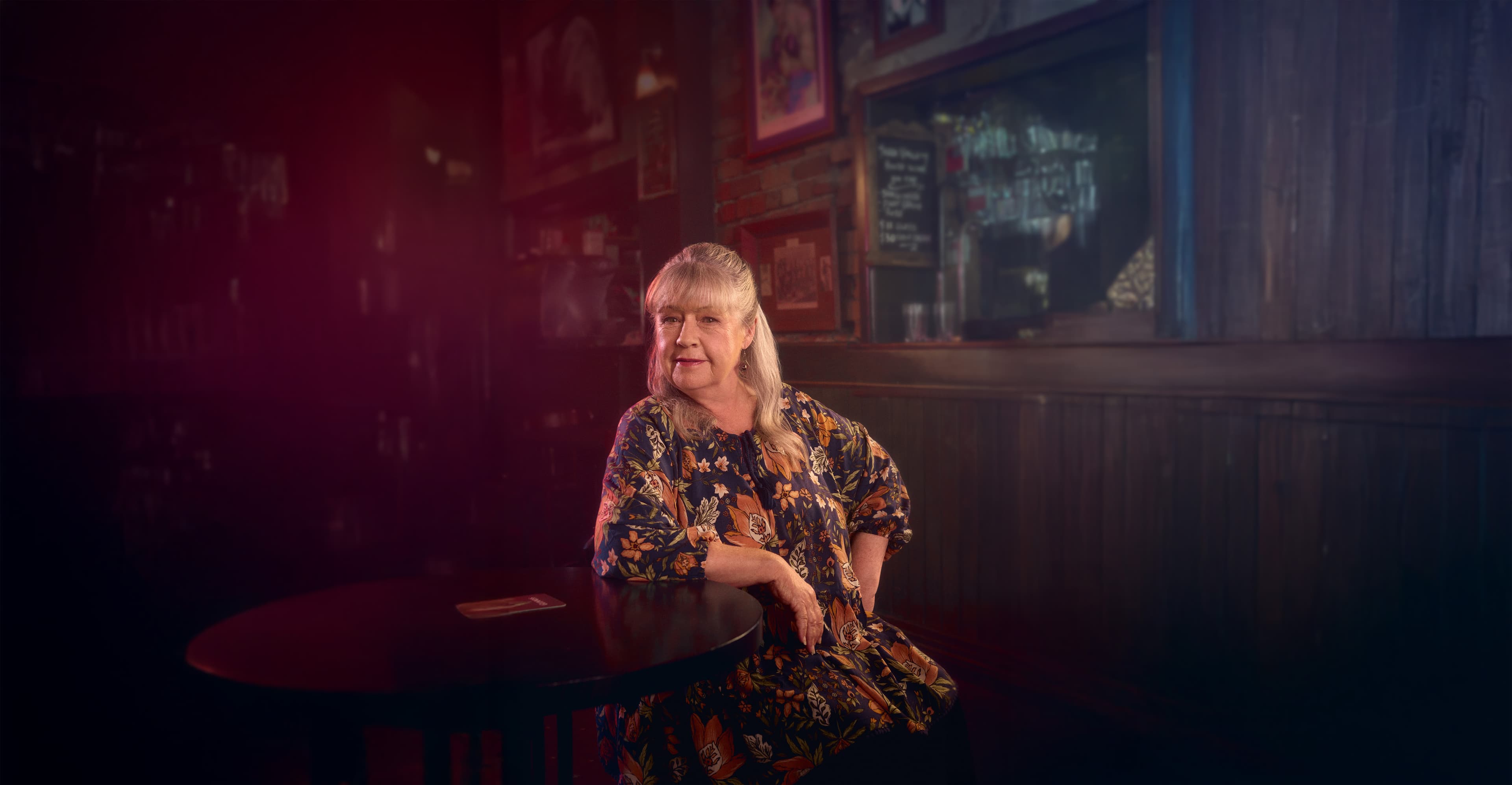
In Conversation with beloved Australian star of television, cinema and stage, Noni Hazlehurst
Noni Hazlehurst is a generational name in Australia — a presence woven through the childhoods, households and cultural memories of millions. Millennials grew up with her warm, generous voice on Play School, singing, dancing, and sparking imagination onscreen. Their parents knew her as a trusted guide on Better Homes and Gardens, or recognised her early acting brilliance in Ride on Stranger, Monkey Grip, and The Sullivans. And of course, in more recent years, Australian audiences have embraced her in A Place To Call Home, City Homicide, The Letdown, The End, and the hit film Ladies in Black.
But while her screen work made her a household name, Hazlehurst’s stage career has been equally defining. From The Man from Mukinupin and Hamlet to The Beauty Queen of Leenane, her theatrical presence has long moved audiences. In 2015/16 she stunned the nation with her one-woman performance in Daniel Keene’s Mother, earning two Helpmann Award nominations and the 2018 Matilda Award for Best Female Actor in a Leading Role. Now, following that celebrated collaboration, Hazlehurst returns to Keene’s pen for The Lark.
Fresh from its world premiere at Arts Centre Melbourne, Hazlehurst is enjoying a brief moment of calm before launching into what promises to be a major 2026 touring season.
“[The shows] went really well and audiences were very attentive and responsive and it got lots of lovely feedback,” she says. “I’m having a little break now — the calm before and after the storm. I have to keep doing it in my head and in my house every day to keep my memory.”
In this new work, Hazlehurst embodies Rose Grey, a woman struggling to say her final goodbye to the small inner-city pub she has called home all her life. The Lark — now derelict, closed for six months, and marked for demolition amid suburban gentrification — is more than a pub; It is Rose’s childhood shelter, her family’s haven, and a vessel for decades of memories absorbed into its very walls. Faced with inevitable change, Rose stands firmly in place, her heart tethered to a past she can no longer keep.
On its surface, The Lark is a tender ode to Australian pub culture. Beneath that, Keene’s elegant, quietly devastating writing reveals a much deeper story — one about stagnation and sentimentality, the terror of change, and the ache of realising too late that the past can hold us more tightly than we ever intended.
“Identity and change of identity are at the core of this,” Hazlehurst explains. “Rose says ‘The people around here change. They had different lives — easier lives — you know. The money came into town and the cities became a Mecca’, and it's funny, Covid sort of changed that again when these great inner cities became ghettos because no one could go out (but we won’t talk about that!). It’s about change and evolution whether we like evolution or not. There’s nothing surer than the fact that evolution will occur. It’s about the past and about loss and what’s important.”
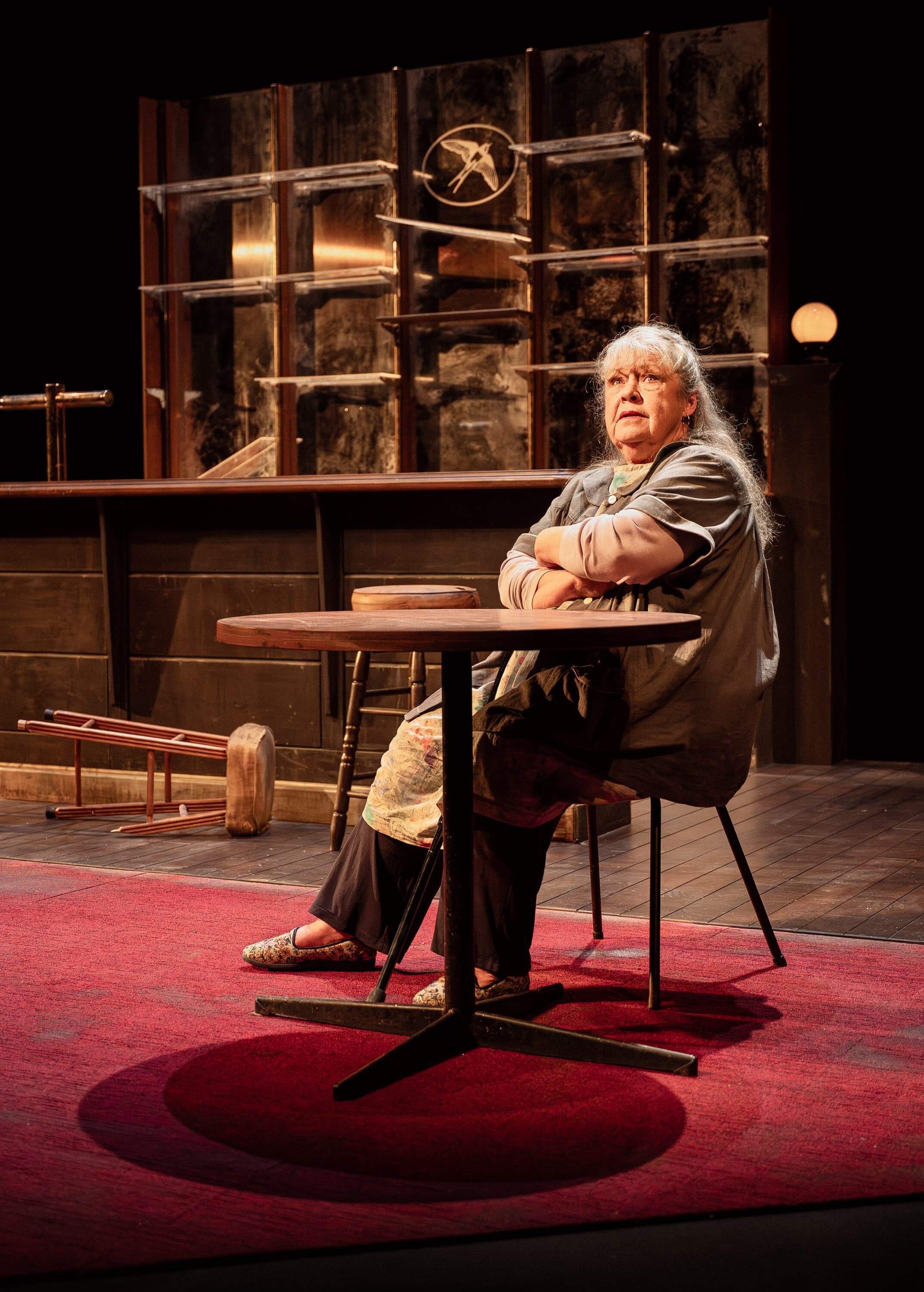
It’s also about regret — the kind that sits quietly, then strikes. “Rose’s greatest tragedy is that she realises at the end of her life that she could have made different choices and I think that's something that a lot of people would relate to — the what if and if onlys.”
For Hazlehurst, the real drawcard lies in Keene’s profound understanding of character. Like Mother, The Lark presents a richly layered, deeply human woman — flawed, funny, bruised, complex, and achingly real.
“Keene’s writing is so richly and beautifully crafted. There are certain things that happen to Rose that resonate for me and are things that I know happen to other people. Everyone is very complex, everyone’s had a very complex lived experience of some sort. His writing creates a character and then that’s my job to flesh out that complexity and show it in a true and authentic way.”
Keene wrote the role of Rose Grey specifically for Hazlehurst, a gesture she treats with deep gratitude.
“I'm very free with my emotions and I think Daniel knows that. He’s quite a doer himself, he has a very funny side and he loves a good laugh but he also has obviously a very serious side. I think he knows he can trust me and that's something I honour. I think the reason it all exists is because I have a very deep understanding of where Daniel is coming from being very close friends for the last 10 years. In fact we shared a house with his partner and I shared a house for five years. He puts this world out and gives me the freedom to explore. Again I feel like it’s another great gift.”
“To have a renowned, acclaimed playwright writing for you — I mean it’s remarkable and I never take it for granted.”
Noni Hazlehurst on Daniel KeeneThat emotional trust is further strengthened by director Matt Scholten, whose stripped-back approach allows Hazlehurst to command the stage for the full 75 minutes — an uninterrupted monologue that pins audiences to their seats.
“I love a challenge and it’s better than sitting in a dressing room waiting for your cue in the story,” she laughs.
It’s no surprise Hazlehurst is drawn to stories that demand emotional fearlessness. Her legacy in Australian children’s television sits comfortably alongside her passion for darker, more complex storytelling.
“Play School was very much a part-time thing that I did for 24 years and I’ve never tried to get away from it. I’m still actively involved in advocacy for preschool children, always have been. I just look for something that’s going to challenge me and that I think is a story worth telling… I’ve certainly always been a storyteller. We all have these dark souls but not many people get to explore them.”
With The Lark, Hazlehurst once again steps into that creative space — illuminating the tender, painful, beautiful terrain of a woman at a crossroads, and inviting audiences to examine the “what ifs” and “if onlys” of their own lives.
The Lark will be showing in Geelong Arts Centre’s The Story House from Wednesday 12 August through to Saturday 15 August 2026.